

About Roosimine and Tõstamaa Folk Costumes
Our logo story.
In the roositud patterns of the traditional mittens and stockings of Tõstamaa parish are recorded the beliefs, values and stories of our ancestors – the local cultural heritage, roots and identity.
These stories live on today in our traditional knitwear, hand-spun yarns, home-woven rugs, and also in completely new, contemporary combinations. Because we are here, rooted in Tõstamaa, today.
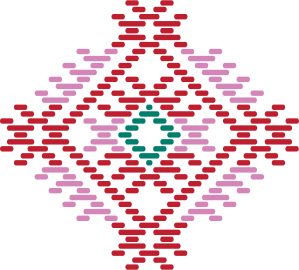
The patterned symbol of what we do and who we are is easy to recognise – the small roositud ornament. You will find it on our products and next to information about us, like the mark of a small secret society.
Clothes that carry one parish's memory.
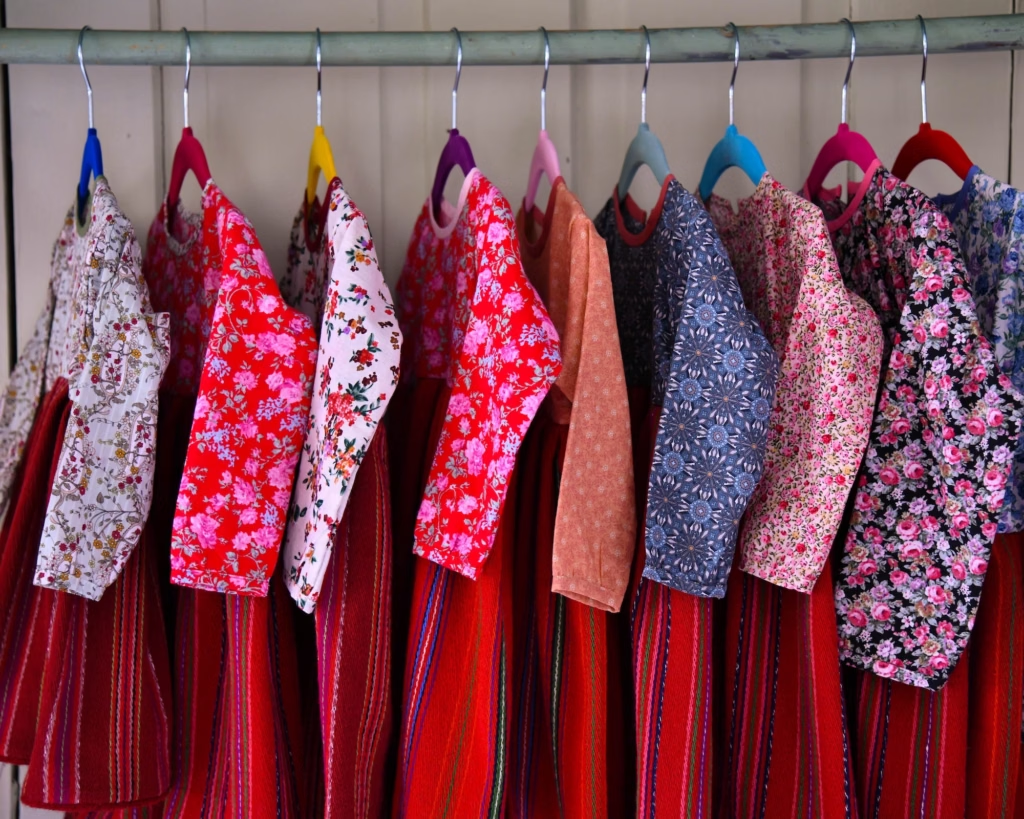
Tõstamaa parish belonged to the historical Pärnu County and was settled relatively late, only in 1670. There were seven manors here, two of which – Pootsi and Tõstamaa – were knight’s manors. The existence of the manors also influenced the folk costumes. Folk costumes remained in use in this area for a long time – women were still wearing them in the early 20th century.
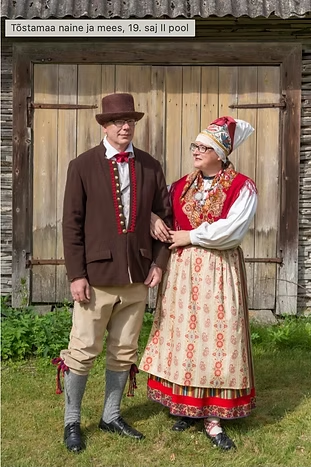
The folk costumes of Tõstamaa parish belong, by type, to the West Estonian folk costume group. The costumes of the parishes of Pärnu County differ greatly in colour and cut. Tõstamaa parish costumes are characterised mainly by sheep-brown outer garments of an older cut, kaabud (a type of coat) with a tapering hem, tall headdresses, red-based skirts, roositud stockings and mittens, and many rag tassels on festive days.
You can find more information and photos about Tõstamaa folk costumes here.
About roosimine and roositud mittens
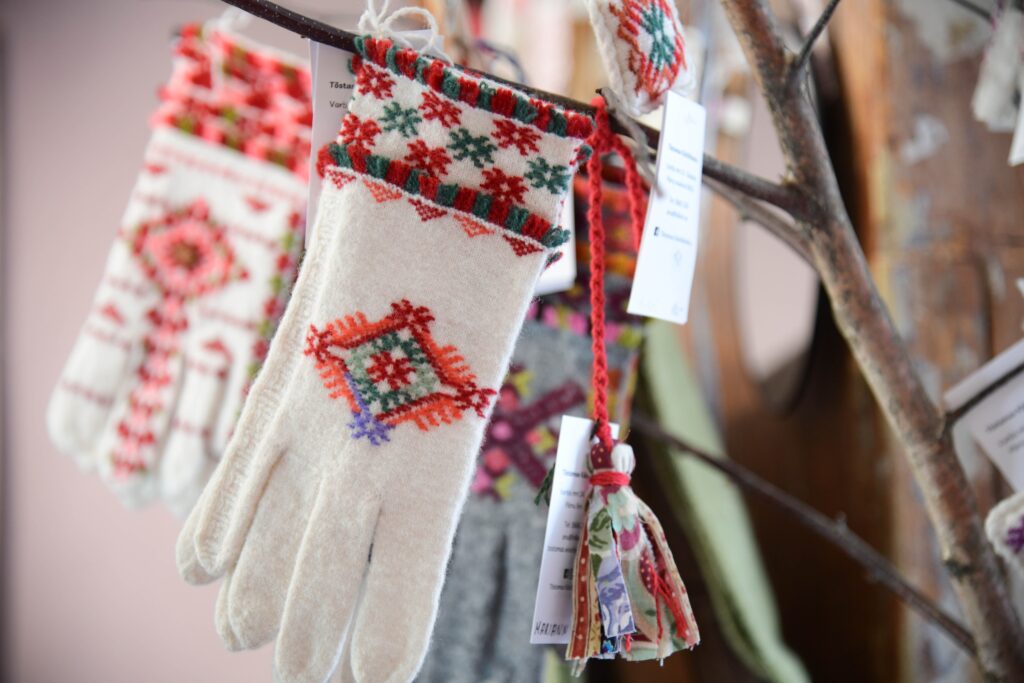
Nearly two centuries ago, women in the Tõstamaa area began knitting very beautiful white “rosed” stockings and mittens. The oldest ones, kept in the Estonian National Museum, date from 1831. At first the stockings and mittens had rather modest decorations, but within a couple of decades they became very splendid: the knitting was dense and fine, and the roositud ornaments, mainly in red tones, spread across the back of the hand on the mittens and covered both sides of the stockings.
Tõstamaa mittens always had a white background, and in addition to women’s mittens and stockings, the wrists of men’s mittens were also roositud. Patterns were often repeated, sometimes with small variations, and the more common ones even had names of their own: veskitiivuline (windmill wing), kassikäpaline (cat’s paw), sõelaservakirjaline (sieve-rim pattern), kaheksakannuline (eight-spurred) and rehapiiline (rake edge). The white mitten yarn was made at home, but the coloured yarns were probably bought from Riga.
In the 19th century these mittens were often worn only as church mittens, and larger examples over other mittens. In the Soviet era, when practical items were knitted, roositud mittens with a single-colour background were probably considered not very warm, and knitting them also took a lot of time. Time did its work, and the roosimine technique fell into oblivion.
Then, in 2010, women at Tõstamaa Handicraft Centre who were enchanted by handicrafts and local traditions came together, and each made herself a pair of roositud fingered gloves following the example of the old mittens.
Now we have more roosimine knitters than you can count on your fingers. We have revived the roositud knitting technique right here, where it was historically done. We gladly share our experience with others too, because many people interested in this technique and in our craft community travel to us from near and far.
A beautiful tradition and technique has been given a new life (and story).